For much of the twentieth century, a thriving underground market existed for American babies. Attorneys, physicians, midwives, and fixers of every kind brokered the placement of newborns outside any legal oversight, for fees that ranged from a few hundred dollars to tens of thousands. The children handed over in these transactions grew up with sealed records, falsified birth certificates, and no legal right to know who they were. Many still don’t.
I know this history personally. I was handed over as an infant along a hospital curb in what has since been confirmed as a black-market adoption. An attorney extorted $30,000 from my adoptive parents, with the threat of taking back the baby.
This is not a fringe history. It is America’s hidden baby trade and a resurgence is underway.
What Is a Black Market Adoption?
A black market adoption, sometimes called an independent, gray market, or underground adoption, is any placement of a child that bypasses the legal oversight intended to protect the child’s welfare. That oversight includes licensed agencies, licensed social workers, court approval, and accurate record-keeping.
In practice, black market adoptions in mid-twentieth-century America typically worked like this: an unwed or economically desperate mother gave birth, often at a private clinic, a maternity home, or a hospital where a complicit physician worked. A middleman — an attorney, a doctor, a broker — connected her with an adoptive family willing to pay outside the system. The birth mother often received nothing, or a fraction of what the middleman pocketed. She frequently signed paperwork she didn’t understand, was told she had no other options, or was never told her rights at all. The adoptive parents received a baby and, sometimes, a falsified birth certificate that listed them as the biological parents from day one.
The child received no legal protection whatsoever.
The Roots of the Trade: Social Stigma as the Engine
To understand black market adoption, you have to understand its fuel: shame.
From roughly 1945 to 1973, a period now known among adoptee advocates as the Baby Scoop Era, the United States saw a massive surge in infant adoptions driven almost entirely by social stigma. Unmarried pregnancy was treated as a moral catastrophe. Young women were sent away to maternity homes, hidden from neighbors, pressured by families, coerced by social workers, and in many cases never given the chance to reconsider surrendering their children. During the era of closed adoption, hundreds of thousands of women disappeared into shame-filled maternity homes.[1] Many were forbidden to see their newborns.
From 1945 to 1973, it is estimated that up to 4 million parents in the United States had children placed for adoption, with 2 million during the 1960s alone.[2] Annual non-relative adoptions increased from an estimated 33,800 in 1951 to a peak of 89,200 in 1970,[2] nearly tripling during that period.
The demand for white infants was enormous, fueled by the cultural pressure on middle-class couples to build a “complete” family. The supply was manufactured by shame and coercion. Into that gap stepped a network of operators willing to profit from both sides.
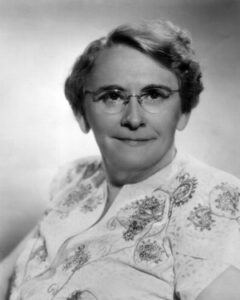 Georgia Tann: The Woman Who Invented Modern Adoption and Corrupted It
No single figure shaped black market adoption in America more than Georgia Tann, director of the Tennessee Children’s Home Society in Memphis from 1924 to 1950.
On the surface, Tann was a reformer. She spoke at conferences in major American cities, advised First Lady Eleanor Roosevelt on adoption matters, and was invited to Harry Truman’s presidential inauguration. She is widely credited with destigmatizing adoption at a time when child welfare professionals actively discouraged it.
Beneath the surface, she ran a baby trafficking racket. Between 1924 and 1950, Tann operated out of Tennessee selling children to wealthy clients nationwide. Many were neglected and abused. Untold numbers died. Protected by political boss Ed Crump, she sold over 5,000 children, some for more than $100,000 per child in today’s dollars.[3] She paid nurses and doctors to help identify vulnerable mothers and redirect their babies into her network.
To cover her crimes, Tann falsified adoptees’ birth certificates, sealing their true ones and issuing new ones that portrayed adoptive parents as biological parents. Legislators later approved this practice, believing it would spare adoptees the stigma of illegitimacy. It still holds in most states today.[4] Joan Crawford was among her clients.[4] So were hundreds of other wealthy Americans who paid premium prices for “choice” babies, never knowing — or perhaps choosing not to ask — where those babies came from.
Tann died in 1950, just days before a state investigation would have exposed her fully. She faced no criminal consequences. Many of her victims are still searching for their origins.
Books about Georgia Tann:
- The Baby Thief: The Untold Story of Georgia Tann, the Baby Seller Who Corrupted Adoption by Barbara Bisantz Raymond (2007), the definitive investigative account and a Publishers Weekly Best Book of the Year
- Before and After: The Incredible Real-Life Stories of Orphans Who Survived the Tennessee Children’s Home Society by Linda T. Austin
- Black Market Babies: The Secret Adoption Scandal of Georgia Tann by Oliver Patrick (2024)
Films and TV:
- Taken at Birth (TLC, 2019): A documentary following the “Hicks Babies,” more than 200 newborns illegally sold or given away from the back steps of a small-town Georgia clinic[5] run by Dr. Thomas J. Hicks during the 1950s and ’60s
How Black Market Adoption Erased Identity
The damage of black market adoption is not only the transaction itself. It is the erasure.
Sealed records, falsified documents, and deliberately broken paper trails were not incidental side effects of these schemes. They were the architecture. They protected the brokers. They protected the adoptive parents from scrutiny. They left the adoptee with no legal standing to ask a single question about their own origins.
For many adoptees, the arrival of consumer DNA testing in the 2010s was the first time in their lives they had access to any verifiable biological truth. What that testing has revealed about misrepresented origins, unknown siblings, falsified nationalities, and the full extent of these networks is still being tallied.
I know this firsthand. I wouldn’t obtain my first legal birth certificate until I was 47 years old.
Black Market Adoption Is Not Ancient History
It is tempting to think of this as a story that ended sometime around 1973, when Roe v. Wade reduced the supply of relinquished infants and the Baby Scoop Era wound down.
It didn’t end.
The Hicks Babies story broke in 1997,[5] and those adoptions happened in the 1950s and ’60s. The survivors were middle-aged adults when they learned the truth.
The coercive and fraudulent practices that defined the black market era left structural residue that persists today: sealed records in most U.S. states, original birth certificates locked away from the very people whose births they document, reunion registries that depend on both parties knowing to look, and an adoption industry still largely unregulated at the attorney and independent-placement level in many states.
The babies of that era are now in their fifties, sixties, and seventies. Many are still looking for answers.
Baby Scoop Era 2.0: Here We Go Again…
The shame, the coercion, the supply-and-demand logic that treated women’s bodies as a pipeline and newborns as product was not buried with the twentieth century. The conditions that made it possible are being rebuilt right now.
In June 2022, the Supreme Court overturned Roe v. Wade in Dobbs v. Jackson Women’s Health Organization. In his majority opinion, Justice Samuel Alito pointed to a CDC statistic noting that nearly one million women were seeking to adopt children, while the “domestic supply of infants relinquished at birth had become virtually nonexistent.”[6] Justice Amy Coney Barrett, an adoptive parent, had earlier suggested during oral arguments that safe haven laws made it easy enough to simply drop off a baby you didn’t want.[7]
Read that again. The Supreme Court of the United States cited a shortage in the domestic supply of infants as a reason not to worry about forcing women to continue pregnancies against their will.
That language is not new. It is the same logic that powered Georgia Tann. The same logic that filled maternity homes during the Baby Scoop Era. The same logic that has always treated poor women and their children as a resource to be managed for the benefit of wealthier families.
The infrastructure is already in place. Crisis pregnancy centers brought in at least $1.4 billion in revenue in the 2022 fiscal year, including at least $344 million in government grants,[8] while abortion clinics were shuttered across the country. There are an estimated 2,500 such centers operating nationally,[8] outnumbering abortion providers roughly three to one.
Psychotherapists and adoption reform advocates have long documented how CPCs funnel vulnerable women to adoption agencies that place them in maternity homes,[9] where they face moralistic pressure, financial leverage, and legal counsel provided by the very agencies that profit from their relinquishment.
The numbers are already moving. Some adoption agencies reported increases of 10 to 20 percent in women seeking to place newborns after Dobbs.[10] Domestic infant adoptions rose 3.17 percent between 2019 and 2022,[11] while researchers are still working to understand what role abortion restrictions played.
One pregnancy counselor in Indiana, a state that banned abortion, described a rising pattern of women arriving at her agency uncertain of their options and making adoption plans after delivery,[10] not because they chose it first, but because they ran out of alternatives.
That is the definition of coercion. It doesn’t have to involve a shady attorney and a hospital curb to qualify.
The adoption industry itself remains a $30 billion enterprise with almost no federal regulation. Independent placements brokered by attorneys are still legal in most states. There is still no uniform national standard for how adoption agencies must counsel prospective birth parents, what disclosures they must make, or how long a woman has to change her mind after signing a relinquishment. The basic architecture of exploitation that enabled the black market era has never been dismantled.[12] It has been dressed up in the language of empowerment and choice.
The women most at risk today look exactly like the women who were most at risk in 1965. Young. Low-income. Without social support. Facing a system that has a financial interest in one specific outcome.
We are watching history prepare to repeat itself. And we know exactly how this story ends, because millions of us are living it.
Further Reading and Viewing
Books:
- A full list of books on Back-Market Adoption
- American Baby: A Mother, a Child, and the Shadow History of Adoption by Gabrielle Glaser (2021)
- The Girls Who Went Away: The Hidden History of Women Who Surrendered Children for Adoption in the Decades Before Roe v. Wade by Ann Fessler (2006)
- Relinquished: The Politics of Adoption and the Privilege of American Motherhood by Gretchen Sisson (2024), the most current research on who relinquishes and why
- The Baby Thief by Barbara Bisantz Raymond
Documentaries and Films:
I Was One of Them

Navigating my mother’s violent alcoholism and caring for my 650-pound father, I spent my childhood trying to save my saviors, unaware of the threat that at any moment, someone could come back for me.
I lived on falsified documents for 47 years, never legally adopted, and spent decades trying to find my biological family, obtain a legal birth certificate, reclaim my true identity, and track down the attorney responsible for it all. And, I wrote a book about it.

WONDERLAND publishes November 3, 2026, from Unsolicited Press, during National Adoption Awareness Month, and I want you with me when it does.
Join the WONDERLAND Launch List:
You’ll be first to know about early reader opportunities, launch day giveaways, including a 3 hour writing consultation, launch events, and the stories behind the story.
Notes
- Baby Scoop Era Research Initiative — Adoption History: Setting the Record Straight: https://babyscoopera.com/adoption-articles/adoption-history-setting-the-record-straight/
- Wikipedia — Baby Scoop Era, adoption statistics 1945–1973: https://en.wikipedia.org/wiki/Baby_Scoop_Era
- IU Pressbooks — The Black Market Behind Adoption in Modern America: https://iu.pressbooks.pub/perspectives4/chapter/the-black-market-behind-adoption-in-modern-america/
- Barnes & Noble — The Baby Thief by Barbara Bisantz Raymond: https://www.barnesandnoble.com/w/the-baby-thief-barbara-bisantz-raymond/1111009618
- AOL News — TLC Special Taken at Birth, the Hicks Babies story: https://www.aol.com/news/tlc-special-taken-birth-dives-171501710.html
- Slate — The Alarming Implications of Alito’s “Domestic Supply of Infants” Footnote: https://slate.com/news-and-politics/2022/05/the-alarming-implications-of-alitos-domestic-supply-of-infants-footnote.html
- Amherst Magazine — A Modern Handmaid’s Tale, Barrett’s safe haven comments: https://www.amherst.edu/news/magazine/issues/2025-winter/amherst-creates/a-modern-handmaid-s-tale
- PBS — After Roe, crisis pregnancy center funding and numbers: https://www.pbs.org/video/after-roe-1709411183/
- The Nation — Shotgun Adoption, CPCs and maternity home pipeline: https://www.thenation.com/article/archive/shotgun-adoption/
- Newsweek — Post-Dobbs adoption increases and Indiana counselor account: https://www.newsweek.com/roe-wade-abortion-dobbs-adoption-1853724
- Johns Hopkins Population Center — Domestic adoptions surging 2019–2022: https://popcenter.jhu.edu/2025/03/19/study-finds-domestic-adoptions-surging-as-international-programs-end/
- In These Times — The architecture of exploitation in adoption has never been dismantled: https://inthesetimes.com/article/alito-adoption-abortion-reproductive-justice-parenthood